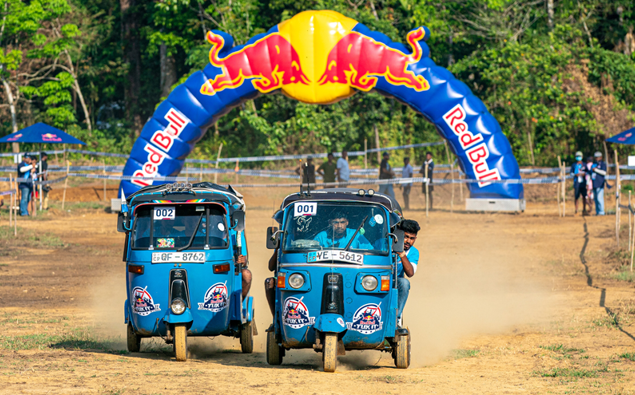
When it comes to navigating heavy traffic, few vehicles come close to the humble tuk-tuk. It’s small, cheap, and it gets people from point A to point B faster than any luxury car. It’s this convenience that made it so popular the world over, from Asia, to Africa and even South America. But there’s more to the tuk-tuk than convenience. It can be incredibly fun to drive under the right circumstances.

Photo: Tuk Tuk Tournament
Tuk-tuks aren’t usually built for speed. The world’s fastest tuk-tuk is custom-built and only reaches a top speed of 81 km/h (50 mph), while run-of-the-mill tuk-tuks reach 34 km/h when going downhill. But don’t let that fool you! They can be very exciting as they barrel down unpredictable terrain during chaotic tuk-tuk races.
It’s hard to say when tuk-tuk racing began in countries like Sri Lanka and Thailand, but the events started getting traction around 2017, and it wasn’t long before the wacky sport drew the attention of the ultimate unconventional sporting event sponsor, Red Bull.
In 2020, the Red Bull Tuk-It gathered 200 teams from all over the world to compete in a two-day, 80-mile race to crown the ultimate tuk-tuk champion. It was a crazy, unpredictable event that drew international attention to tuk-tuk racing for the first time. Since then, tuk-tuk races have become a yearly affair in countries like Sri Lanka and Thailand, and they are as exciting as ever.
The best word to describe tuk-tuk racing would be ‘chaotic’. In motorsports like Formula 1 and Moto GP, speed is paramount, but in tuk-tuk racing, it’s more about keeping the vehicle on its three narrow wheels, as the team attempts to navigate all sorts of terrain, from unpredictable dirt roads to narrow urban alleyways. Making it through a tuk-tuk race unscathed is as much about the skill of the driver as it is about the other team members using their own bodyweight to keep the vehicle from tipping over.
Teammates have to shift their weights based on the speed of the tuk-tuk and on the terrain, or risk crashing the motorized rickshaw and potentially flying out of it themselves. These things may not be the fastest, but crashing can still cause serious injuries to passengers.
Traversing mountain and jungle terrain in a tuk-tuk rarely ends without technical problems or getting stuck in muddy ditches, but these occurrences are an integral part of the sporting event, testing the skill and coordination of the teams.
If you’re ever in Sri Lanka or Thailand, attending a tuk-tuk race should definitely be on your to-do list. The next event is scheduled for October 2026, so you should have plenty of time to make travel plans.