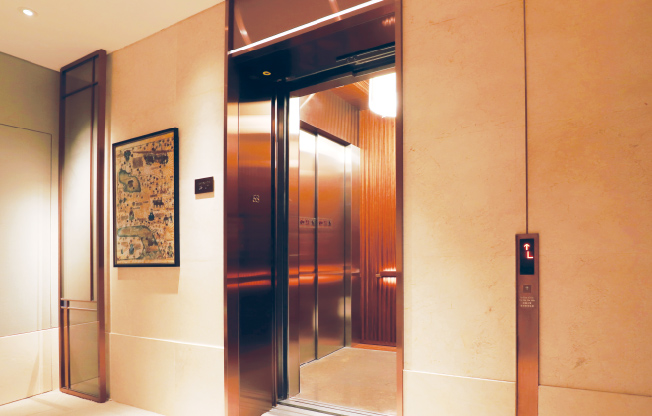
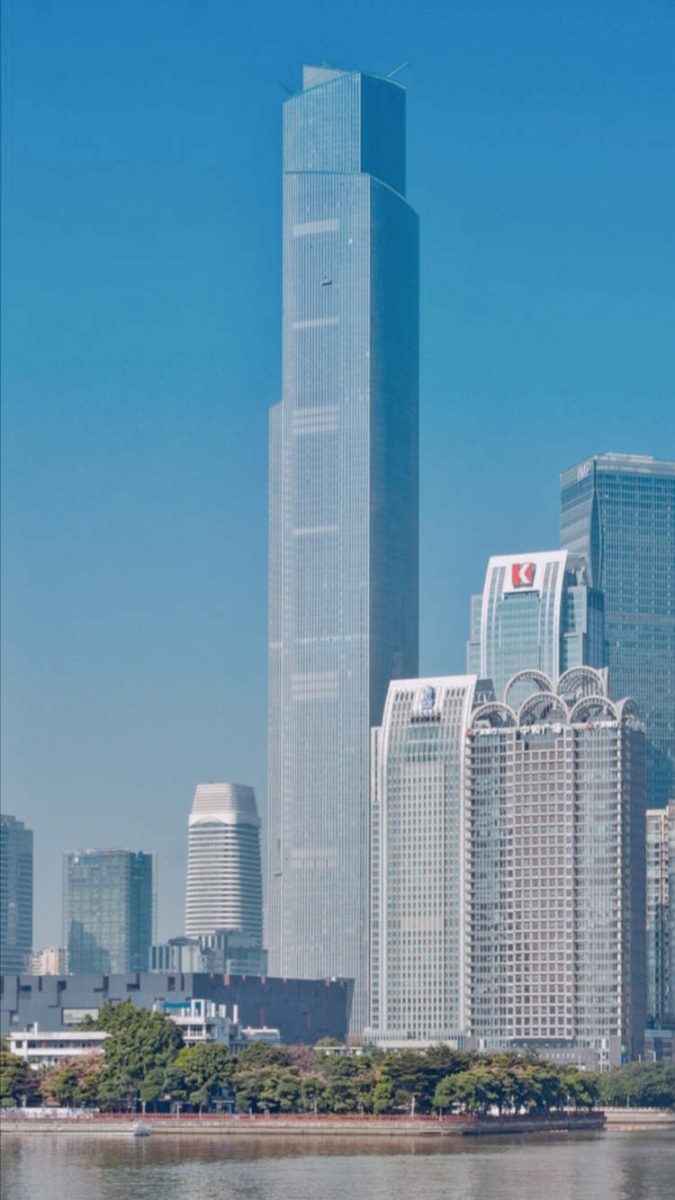
When it opened in 2016, the Guangzhou CTF Financial Centre became the tallest building in the Chinese metropolis. It stretched 530 meters towards the sky, and featured 111 floors above ground and five below ground. But all people could talk about was the two super-fast Hitachi elevators capable of transporting passengers from the ground to the 95th floor in just 43 seconds.
Hitachi installed a total of 95 elevators in the Guangzhou skyscraper, including 28 double-decker cars, 13 high-speed elevators, and 52 low and medium-speed elevators, but it was the two express elevators that would end up snatching the title of “world’s fastest elevators” that captured people’s imagination.
The world’s fastest elevators lived up to the hype, reaching a top speed of up to 1,200 m/min (3,937 ft/min, or 44.7 mph/72 km/h). The previous record holder was a Toshiba elevator installed in the iconic Taipei 101 tower capable of reaching a top speed of 38 mph (61 km/h).
How did Hitachi create the world’s fastest elevators? Well, it was no walk in the park, as there were many issues to consider in order to ensure that these technological wonders were both fast and safe for passengers. To reach breakneck speeds, the elevators rely on thin-profile, permanent magnet synchronous motors and compact traction machines that make the lifting system lighter. The elevator cars are shaped like aerodynamic capsules to reduce wind resistance.
But there is more to these elevators than speed. When designing them, engineers needed to account for problems like emergency braking. These impressive elevators are equipped with special brake pads designed to endure temperatures of up to 300°C (572°F) caused by the extreme friction of stopping a car moving at extreme speeds.
The Guangzhou CTF Financial Centre elevators are equipped with active guide rollers that detect even the slightest vibration in the rails and use motors to shift the elevator car in the opposite direction, canceling out any shaking.
Going up so fast would normally cause users’ ears to “explode” due to the rapid altitude change, but these elevators have pressurized elevator cars and an automated system that actively adjusts air pressure, helping passengers to become acclimated during their 43-second ride.