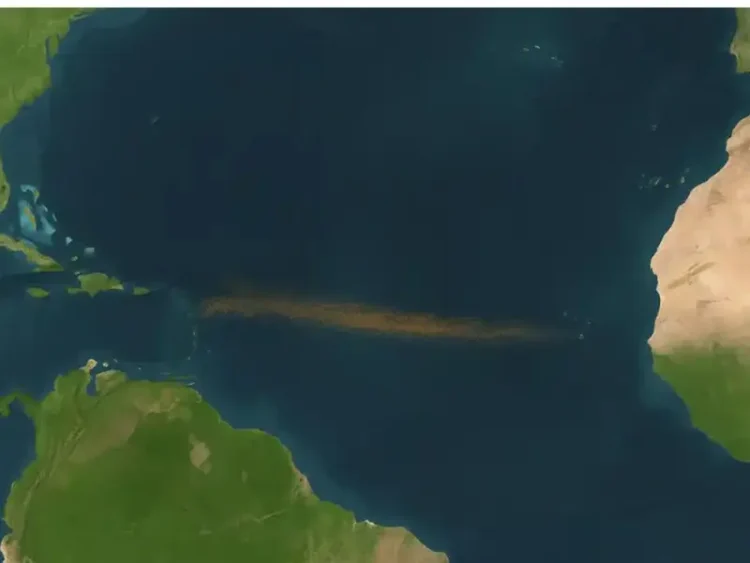
The Great Atlantic Sargassum Belt is a shockingly large mass of brown algae almost double the width of the American continent, and clearly visible from space.
The first major bloom of the Great Atlantic Sargassum Belt was observed by scientists in 2011. In the almost 15 years since, it has ballooned into a giant mass that stretches 8,850 km and weighs 37.5 million tonnes. It stretches from West Africa all the way to the Gulf of Mexico, forming a massive brown ribbon visible from outer space. Once confined only to the Sargasso Sea, the sargassum belt has been unleashed into the open ocean as it continues to grow because of increased levels of nitrogen and phosphorus in the water.
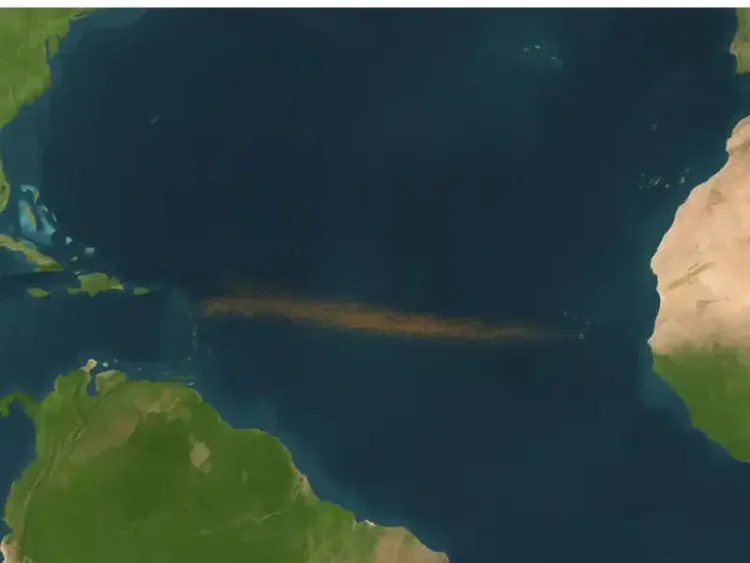
The uncontrolled growth of the Great Atlantic Sargassum Belt can be linked to pollution from farming, sewage, and waste, all of which add to the already growing nitrogen and phosphorus levels in the Atlantic Ocean. On the upside, the growth of the giant sargassum belt provides a diverse and complex ecosystem for many marine species, like fish, crab, shrimps, eels, and turtles, but it can cause a lot of damage as well.
The 8,850-km-long brown belt blocks sunlight for coral reefs, which is necessary for photosynthesis, it damages massive carbon sinks, and the decomposing algae release hydrogen sulfide, methane, and other greenhouse gases. When close to coastlines, it can negatively affect tourism, fishing, and even nuclear power plants.
With oceans getting warmer every year, scientists believe that the brown tide that is the Great Atlantic Sargassum Belt will continue to grow at a rapid pace, with unforeseen effects likely to occur.