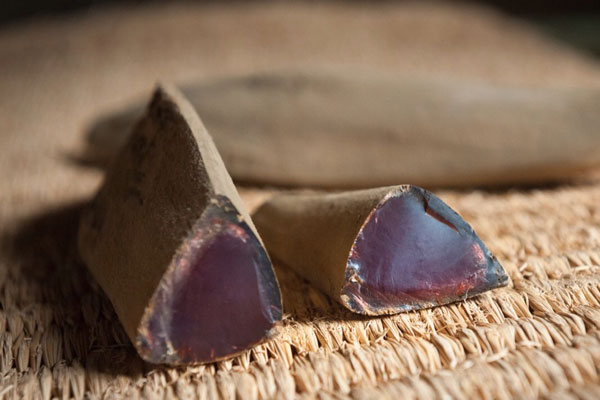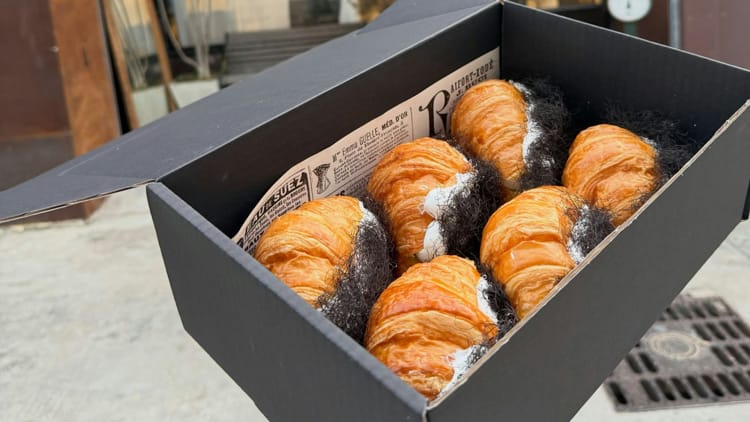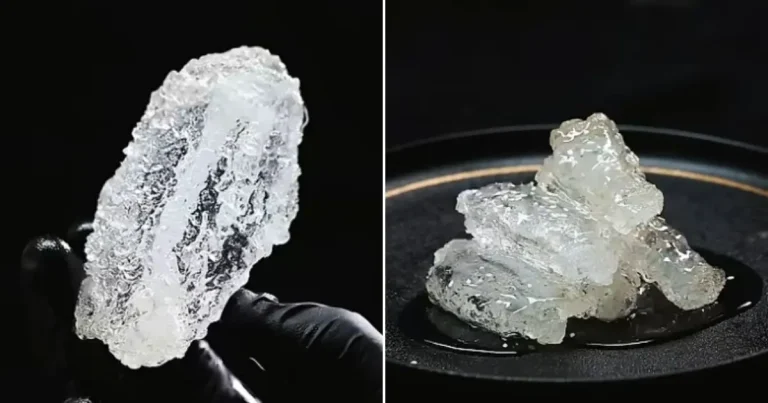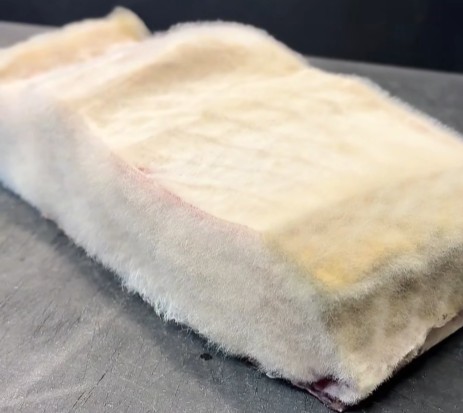
Looking at a 4-week piece of mold-aged tuna, you would swear it was some kind of furry animal; that’s how thick and fluffy the layer of Koji mold (Aspergillus oryzae) can get. But while mold will put a lot of people off, in this case, it is an essential ingredient that makes bluefin tuna more palatable.
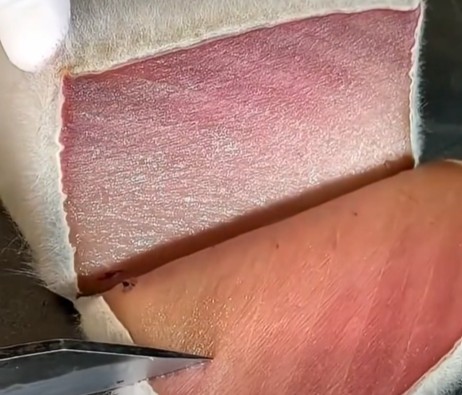
To mold-age tuna, Japanese chefs store pieces of fish in very specific conditions – usually at temperatures between 1 and 6 degrees Celsius and humidity between 70 and 85% – encouraging the development of Koji mold. Over at least four weeks – some chefs will let the mold grow for eight weeks or more – the fish becomes completely covered in a furry-looking layer of mold.
Under the off-putting layer of “fur,” enzymes gradually break down proteins and fats, releasing amino acids, which results in a deep umami flavor (rich, slightly nutty, sometimes with meaty undertones). The meat is also considerably more tender, to the point where it melts in your mouth.
If you’re worried about eating that furry shell, don’t be! The mold is carefully trimmed off, leaving only the aged tuna, which is usually served raw as sashimi or sushi.