A chocolate decoration shaped like a tiny brain gave one baker’s cupcakes an unmistakable Halloween theme. Beneath the unusual topper was a familiar dessert combination: red velvet raspberry cake with French vanilla cream cheese frosting.
The baker described those ingredients in a Flickr photograph uploaded in August 2007. The idea separates the decorative element from the cake itself: chocolate supplies the sculptural shape, while the frosting provides a contrasting surface beneath it. A recognizable sweet becomes a small piece of seasonal food design.

Cream cheese frosting can bring a tangy flavor to a sweet cake. In Susan Reid’s King Arthur Baking recipe, softened cream cheese is beaten with room-temperature butter and vanilla before confectioners’ sugar is added gradually. Milk adjusts the spreading consistency. The recipe makes about three cups, enough for approximately 18 to 24 cupcakes, and offers chopped nuts or candied ginger as optional additions. Reid describes the frosting as a balance between sweetness and tanginess, and also suggests it for gingerbread, carrot cake and pumpkin cake. Those are variations on a general frosting recipe, rather than the original baker’s formula.
The way frosting is applied can be as important to the finished design as the topping. Baker Kye Ameden recommends letting cupcakes cool completely before decorating, since warm cake can melt the frosting. Her guide ranges from simple spoon-made swirls to designs formed with a pastry bag.
A star tip creates ridged swirls, while a petal tip can produce a ribbon-like squiggle. A steady squeeze and a controlled movement of the bag build up the pattern across the surface. For a classic swirl, the decorator can work from the edge toward the center; reversing the direction produces a rosette effect.
A coupler makes it possible to change decorating tips without emptying the bag. Larger shapes can be piped first and smaller details added afterward. The same basic tools therefore offer a wide range of finishes, from a plain frosting spiral to a more elaborate seasonal arrangement.
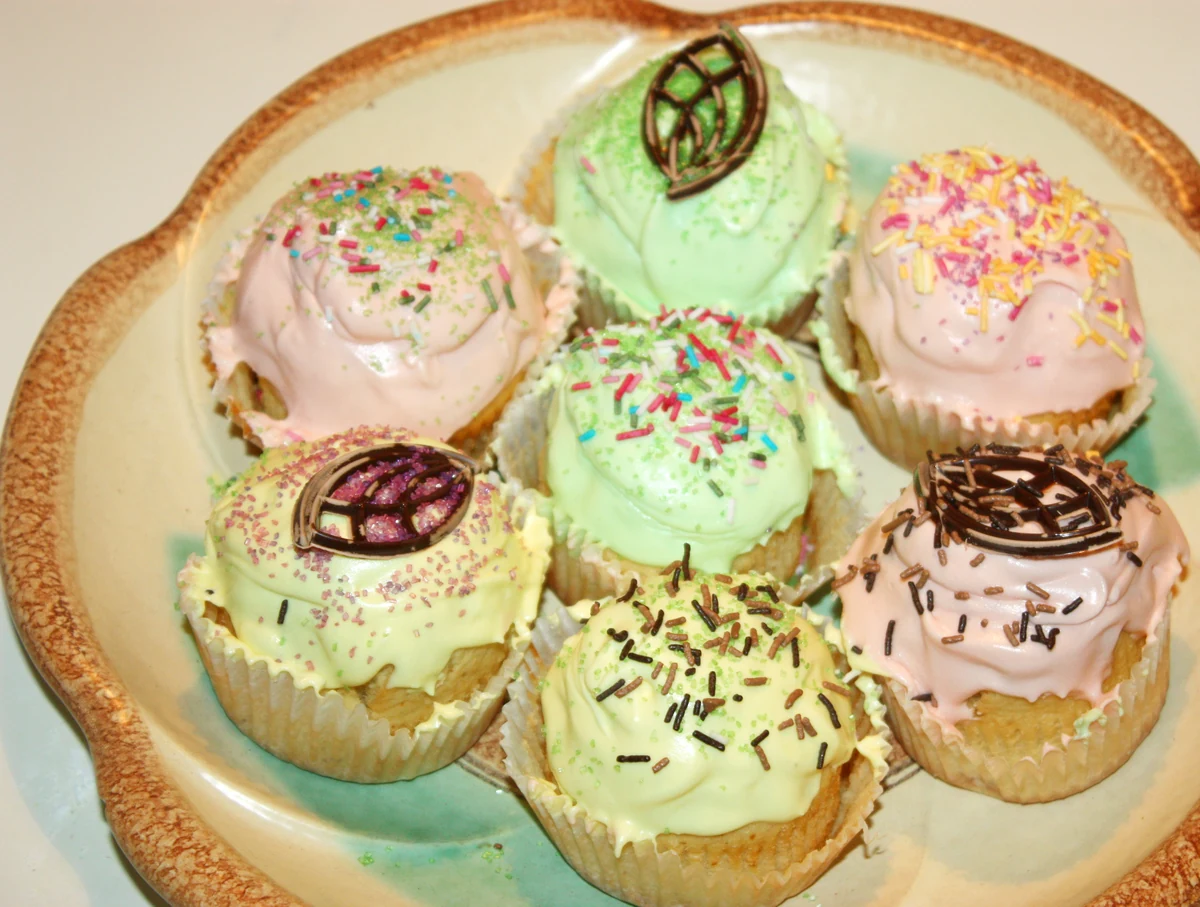
The ordinary cupcakes pictured here demonstrate another approach: pastel frosting, scattered sprinkles and thin chocolate shapes. Their decorations sit above the cake as separate elements, giving each small serving a distinctive silhouette without changing the familiar paper-lined base.
Would like to no if I could get the recipe for the brains that go on top?
Please email me I love making gooey, spooky, gross looking treats My kids and grandkids love them!!!!
And I love to have new ones for my halloween fun so again please email me the recipe….Thank You, Lady